Abstract:
This study compares Pennsylvania coal production and Arizona copper mining during the postbellum era to examine regional industrial growth. Using mining statistics and analysis, it argues that railroads, industrial demand and organizational expansion integrated both industries into the national economy during the Second Industrial Revolution.
Main post:
The postbellum era transformed the American economy through means of rapid industrialization, the expansion of transportation systems, and the increasing demand for natural resources. Between 1865 and 1900, extractive industries became essential to economic growth as coal powered railroads and factories while copper powered the expanding infrastructure of industrialization. Historian Alfred D. Chandler argues that the industries of the Secon Industrial Revolution depended upon large transportation networks, organizational coordination and large economies to sustain this industrial expansion.[1] Pennsylvania coal production represented the established economy of the east, while copper in Arizona reflected the growing integration of the American West into the national industrial system. Through the use of historical mining reports and production statistics, a comparison between Pennsylvania coal and Arizona copper shows how both industries accelerated economic modernization during the postbellum period.
The study uses both quantitative and qualitative historical methods to compare the economic conditions of the Pennsylvania coal industry, and the Arizona copper mining industry during the postbellum period. The primary quantitative source consulted for the study comes from the Reports of the Inspectors of Coal Mines of the Anthracite Coal Regions of Pennsylvania for thr year 1870. The source provide provides detailed statistics regarding cold protection, labor for size, mine infrastructure and industrial accidents.[2] The provided statistics offer measurable evidence of economic growth, and industrial skill. In contrast, Robert L. Spude’s article, “Mineral Frontier in Transition: Copper Mining in Arizona, 1880-1885” provides a historical interpretation of Arizona’s copper boom through the discussion of railroad expansion, investment and mining development.[3] Additionally, an article from the Economic History Association (EHA), “The U.S. Coal Industry in the Nineteenth Century”, provides broader context regarding the importance of culture to industrialization and transportation within the United States.[4] Together these sources provide both measurable economic evidence as well as historical analysis that is invaluable when comparing two distinct sectors of the postbellum economy.
Pennsylvania coal production represented one of the largest industrial sectors in the United States in the late nineteenth century. In 1870, the Pennsylvania binding report recorded over 6,.3 million tons of coal that had been mined by about 30,000 workers across 202 active collieries.[5] These provided statistics demonstrate the large scale of industrial extraction that was already present within the Eastern United States in the period following the Civil War. Coal became indispensable for railroads, manufacturing and steam powered transportation. Chandler explains that industries associated with the second industrial revolution required constant access to materials and transportation systems that were capable of sustaining high volume production. Pennsylvania’s coal economy, reflected that reality through its extensive use of railroads, machinery and industrial coordination.
Simultaneously, Pennsylvania coal production also reveals the harsh labor conditions that are associated with industrial capitalism. The same mining report documented 129 mining deaths and 298 injuries within the Schuylkill mining district alone.[6] Despite these dangerous organ conditions, cold production, continue to expand because industrial demand remained very high throughout the postbellum period. Chandler argues that large industrial firms increasingly relied upon organizational Systems that were capable coordinating labor, and transportation on a national scale. Pennsylvania coal production demonstrated how industrial growth depended on natural resources as well as the managerial transportation systems that were necessary to sustain this large scale extraction.
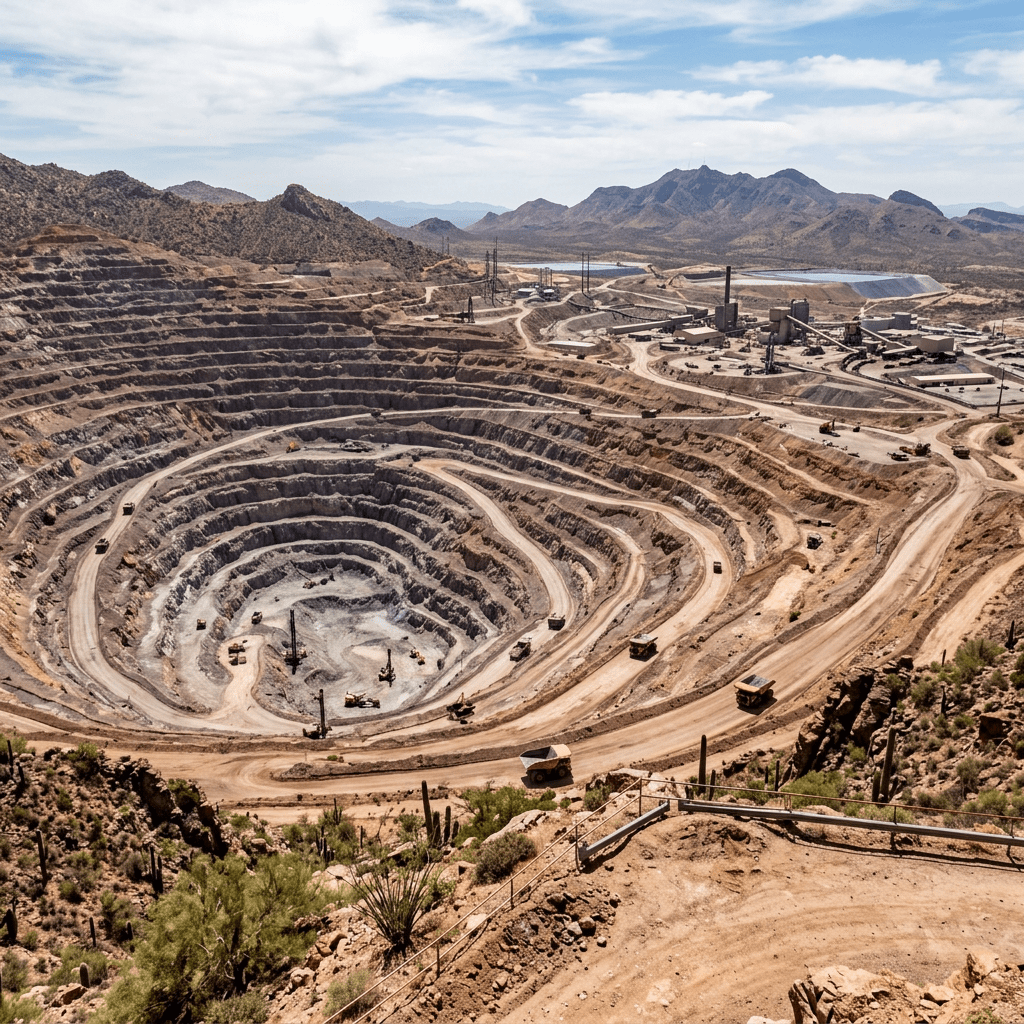
While Pennsylvania coal symbolized industrial maturity, Arizona copper mining represented the booming western economic expansion and the integration of frontier economies into national markets. According to Spude, Arizona’s copper boom accelerated after major railroad lines in the Southwest were finished during the late 1870s and early 1880s.[7] Railroads dramatically, reduced freight costs and connected smaller, isolated mining communities to eastern investors and industrial consumers. The article notes that the Copper Queen Mine near Bisbee produced nearly1,500,000 pounds of copper by the end of 1880.[8] This level of production reflected growing in national demand for copper as industrial infrastructure expanded throughout the United States.
Chandler’s analysis strengthens the significance of Arizona copper mining by placing it within the broader narrative of the second industrial revolution. He identifies copper, steel and electrical industries as some of the most important sectors reshaping industrial economy during the late nineteenth century.[9] Copper became even more important as electrification, manufacturing and transportation systems expanded. Arizona mining companies depended heavily on outside investment and speculative capitalism to finance mining operations and smelting facilities. Spude explains that Eastern investors from New York, as well as others, funded Arizona mining expansion while entrepreneur’s rapidly constructed smelters throughout the territory.[10] Although many of these adventures failed, Arizona copper mining, nevertheless demonstrated how western resource economies became increasingly tied to national industrial growth.
A study between Pennsylvania coal and Arizona copper reveals similarities and differences within the postbellum economy. Both industries relied upon railroads and industrial technology as well as extractive labor systems to sustain their growth. Both industries also attracted major investments due to expanding industrial demand. However, Pennsylvania coal production represented a well-established industrial system while Arizona copper mining, by contrast, reflected a more developing frontier economy that was still undergoing rapid expansion through transportation networks and speculative investment. Coal served as the industrial fuel that powered factories in railroads, while copper increasingly supported electrification and industrial manufacturing during the industrial revolution.
Ultimately, both Pennsylvania coal and Arizona copper played significant roles in shaping the economic transformation of postbellum America. Coal production sustained the industrial strength of the east, while copper mining expanded industrial capitalism into the west. Together, these industries demonstrate how natural resources, transportation systems and organizational coordination fueled economic growth and connected regional economies into a national industrial system during the late nineteenth century.
Bibliography
Chandler, Alfred D. “Organizational Capabilities and the Economic History of the Industrial Enterprise.” Journal of Economic Perspectives 6, no. 3 (1992): 79–100.
Reports of the Inspectors of Coal Mines of the Anthracite Coal Regions of Pennsylvania for the Year 1870. Harrisburg: B. Singerly, State Printer, 1871.
Spude, Robert L. “Mineral Frontier in Transition: Copper Mining in Arizona, 1880–1885.” New Mexico Historical Review 51, no. 1 (1976): 19–35.
[1] Alfred D. Chandler, “Organizational Capabilities and the Economic History of the Industrial Enterprise,” Journal of Economic Perspectives 6, no. 3 (1992): 81.
[2] Reports of the Inspectors of Coal Mines of the Anthracite Coal Regions of Pennsylvania for the Year 1870 (Harrisburg: B. Singerly, State Printer, 1871), 5–8.
[3] Robert L. Spude, “Mineral Frontier in Transition: Copper Mining in Arizona, 1880–1885,” New Mexico Historical Review 51, no. 1 (1976): 19–24.
[4] Fred Gates, “The U.S. Coal Industry in the Nineteenth Century,” EH.net Encyclopedia, accessed May 24, 2026.
[5] Reports of the Inspectors of Coal Mines, 5.
[6] Reports of the Inspectors of Coal Mines, 6.
[7] Spude, “Mineral Frontier in Transition,” 20
[8] Spude, “Mineral Frontier in Transition,” 19
[9] Chandler, “Organization Capabilities,” 81
[10] Spude, “Mineral Frontier in Transition,” 24
HIUS 713 Proposed Topic:
My project for this course examines how family-owned floral businesses adapted to modernization, changing consumer culture, and expanding national markets during the twentieth century while maintaining a meaningful connection within their local communities. Using Family Flowers as a case study, I explore how one family business has balanced entrepreneurial growth with personalized customer relationships. The project also looks into how developments in transportation, floral wire services and consumer culture has transformed the floral industry into an important part of everyday American life.


 Margins of History
Leave a comment